I’m a sucker for a book with a unique premise. So, when I recently finished rereading Fair Rosaline by Nathasha Solomons, I researched what other books she had written in the hopes of them being equally as unusual as the novel about the girl Romeo was head over heels in love with until he saw Juliet, and was not disappointed. I, Mona Lisa, like the title suggests, is about the world’s most famous painting. It’s the story of Leonardo da Vinci’s Mona Lisa, told from her own perspective.
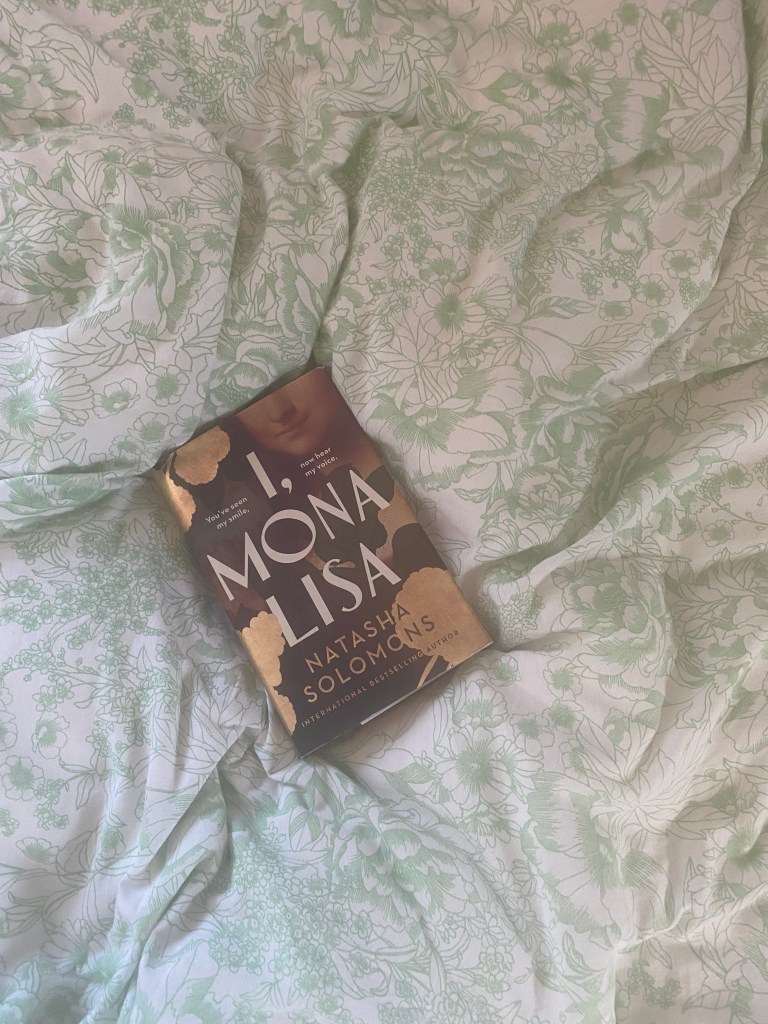
We not only get to witness the process of her creation, but everything that has happened to her since. Which is quite a lot. She has hung in royal palaces, has been stolen, and was hidden for her own safety during the Second World War. While this is a fictional account, a lot of the historical details are true, something I always appreciate and love when reading historical fiction.
In order to overcome the obvious communication problems that would arise otherwise, the Mona Lisa in the novel is able to talk, but only to people that happen to be touched by genius. So, talking to Leonardo da Vinci or Pablo Picasso is no problem, talking to pretty much anyone else very much is. This allows the author to show us the special bond between the painting and the master better, as we get to witness Leonardo’s love for his creation in a way that would be difficult to get across otherwise. It also helps to make Mona Lisa feel like a true character, despite her being a painting.
Now, as much as I love this premise and think it is fascinating to think about all the things a painting as famous as the Mona Lisa has seen in the centuries since her creation, I sometimes felt its limits strongly. For example, in order for Mona Lisa to be able to tell her story to the reader (seeing how she cannot move and can only see what is in her line of sight), she has to be present at several events that, logically, she normally would not be present for. Leonardo might have finished and then left her in a special room, or at his house, as he travelled and worked on other things. That would make for rather boring reading, though, and the way this is avoided in I, Mona Lisa, is that Leonardo is incapable of leaving his masterpiece behind, because he would miss it too much. He has formed a strong, personal bond with Mona Lisa and refuses to sell her, and takes her with him wherever he goes.
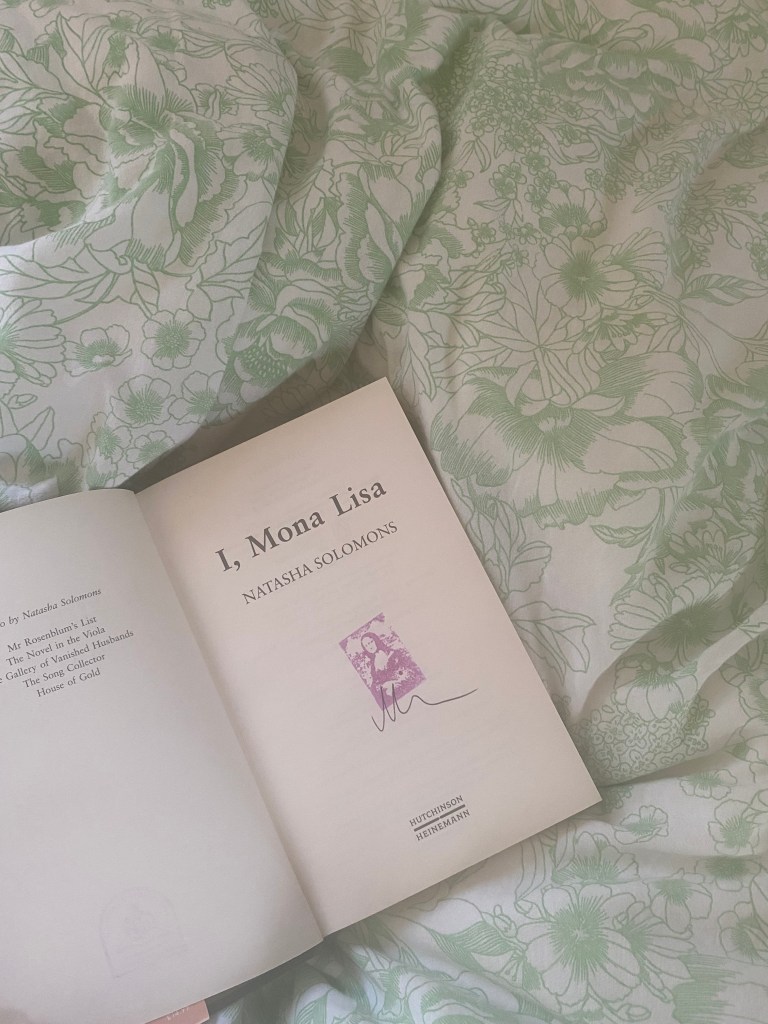
I sometimes struggled to believe in the intensity of the bond, which made the reading experience less enjoyable. I do think that as a reader of fiction, a certain amount of goodwill is acceptable when reading something that might not seem entirely likely to you. After all, I am no creative genius that has created the world’s most famous painting, so who am I to say I would be able to let it out of my sight if I had created something so magnificent? I just wish the author had been able to dispense my disbelief a bit more at points.
Other than that, I did really enjoy I, Mona Lisa. I loved the Italian (interspersed with a bit of French) setting, and the evident amount of research that went into the creation of this world is astounding. At around 360 pages, I flew through this book, because it was so easy to read, entertaining and captivating. In the end, a little something was missing for me to turn this into a favourite book, but I still think this is a book anyone fond of art, historical fiction, or unusual premises would enjoy.


 lou's library
Leave a comment