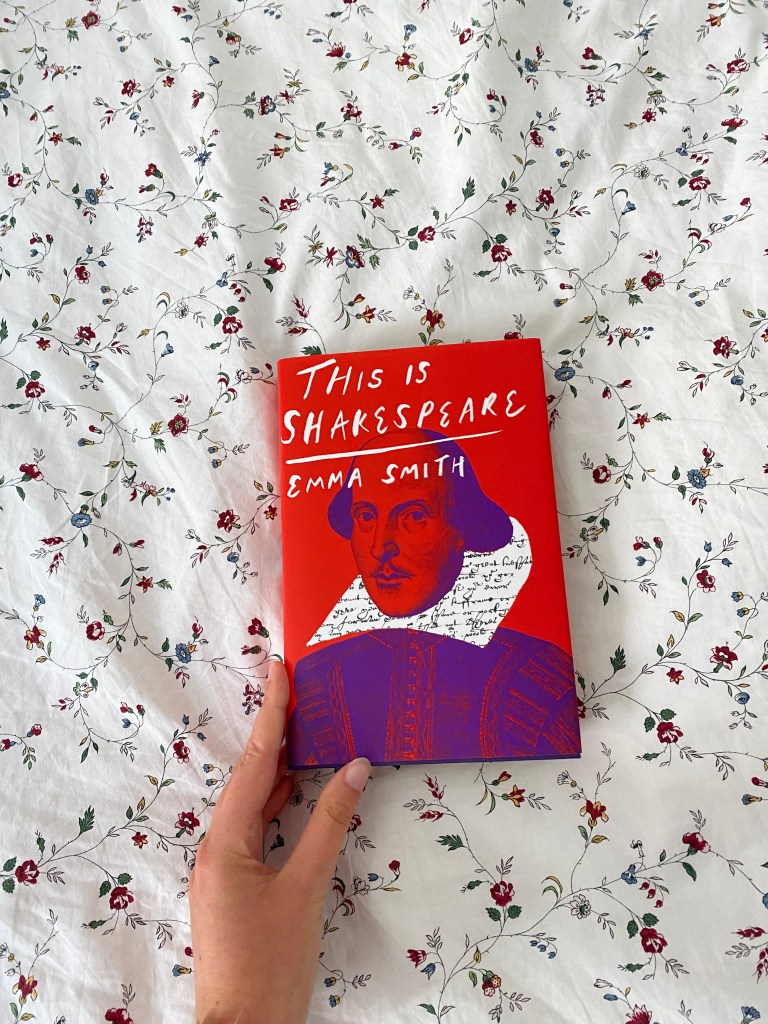
I recently finished reading This Is Shakespeare by Emma Smith, a non-fiction book that acts as a guide for some of Shakespeare’s best-loved plays. Smith is a professor at Oxford University and I found her approach to Shakespeare incredibly refreshing. She focuses on the irregularities in his plays and isn’t hell-bent on praising every single aspect of them. And it made me think about why it is that I love Shakespeare so much. In a culture that celebrates him as the greatest playwright to ever have existed, it is easy to accept that love as a given. But I do believe questioning and reexamining that adoration helps me to keep trying to understand his work better, which usually leads to me gaining even more respect for it. So, today I thought I would try to write down my thoughts on Shakespeare, as much for myself as for anyone else.
I know he’s daunting, but also fun!
Shakespeare can be incredibly daunting. I know that when the school drama club I was a part of performed A Midsummer Night’s Dream by Shakespeare when I was 13 years old, I was slightly terrified. But I was also excited and quickly fell in love with the play with its fairies and whimsical forest, confusions and love potions. To this day, it is one of my all time favourite plays, and I think that is in part because I got to approach it with childlike wonder and in an atmosphere of confidence and whimsy. My drama teacher was amazing at helping us get acquainted with the (for a 13-year old) unusual language and rhythm of the speeches and made us understand that, even though we were performing Shakespeare, we still got to do it our way, have fun with it and make it our own.
I do think A Midsummer Night’s Dream is a great way to start with Shakespeare. It’s a great introduction because it is a bit silly and yet deals with big questions such as what it means to love and the power dynamics between men and women. It is often argued that Shakespeare is still so relevant today precisely because his work focuses on these timeless questions that humans have had to grapple with for centuries. And while I do think there is some sense in that, I found it incredibly insightful to read Emma Smith’s take on the question in This Is Shakespeare. I’m paraphrasing here, so if you want to know her exact words, do go ahead and read her book, but essentially she argues that his plays are full of plot holes and inconsistencies and that there are very little stage directions. All of this leaves room for interpretation, which allows readers, no matter what century they are living in, to take from Shakespeare exactly what it is they need. This means, in Smith’s view, that Shakespeare keeps being read and celebrated because he allows us to make of his material what we want it to be.
For example, The Taming Of The Shrew has become one of Shakespeare’s most controversial plays, because it does not align with modern day feminism and our view of how women should be treated. Without wanting to give away too much, there is a speech at the end of the play by the protagonist Kate, until then an incredibly fierce and confident woman not intending to marry someone she does not want, essentially doing a one eighty and reversing everything she has said thus far. It usually leaves modern audiences speechless and struggling to come to terms with the ending. Two hundred years ago, this would probably have been perceived differently. So, in this sense, Shakespeare keeps providing food for thought for each new generation, which is why we keep on coming back to him.
His writing is stunning!!
Well, it is that and the sheer beauty of the language of everything he wrote. I appreciate it might take a while to get used to his style, the unfamiliar words and the rhythm and rhyme of it all. But it is so worth perservering with, because Shakespeare rewards you with lines so breathtaking it really seems incredible to believe anyone will ever reach his level of skill again. I know I am turning into a bit of a fangirl here, but I do believe him to be the greatest writer. And don’t get me wrong: I did not read a play by Shakespeare until I was nineteen (I never read the entire A Midsummer Night’s Dream in drama club, only the script our teacher had written for us), and even then I only did it because my professor forced us to. I know what it feels like to open one of his plays and be confused, because you don’t know who any of these people are or what they are doing. Emma Smith notes in This Is Shakespeare that the beginning usually isn’t the best place to start a Shakespeare play. I usually have to read them twice to fully understand what’s happening.
But I think that in a world that ruins our attention spans, there is something rewarding in sticking with something, even if you don’t automatically get it or love it. Plus, it helps to read Shakespeare’s plays out loud, as they were written to be performed, and not read. It will also help you to appreciate the beauty of the writing even more. I cannot stress how much I love seeing his plays performed. I had the absolute privilege of seeing Jonathan Bailey in Richard II in London this spring (I still can’t believe that actually happened), and had one of the best nights ever on a sunny London evening watching A Midsummer Night’s Dream at the Globe Theatre. I do think that seeing Shakespeare performed live is one of the surest ways of falling in love with the material. His plays are funny, deeply tragic, complex, silly and everything in between. If you don’t enjoy tragedies as much, perhaps his comedies are your thing? Or his history plays? There are also a bunch of Shakespeare plays that are hardly ever talked about outside of academic contexts and I do think it’s worth it to look beyond Romeo and Juliet and Hamlet and go explore his lesser-known work (a very relative term when it comes to Shakespeare, I know.
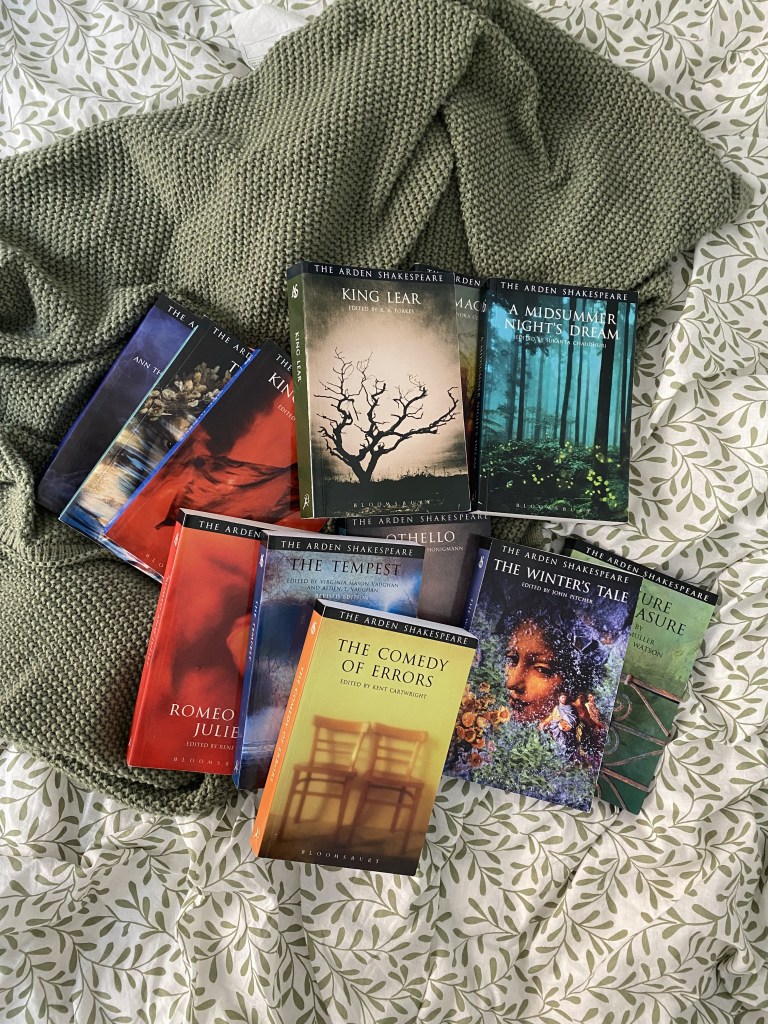
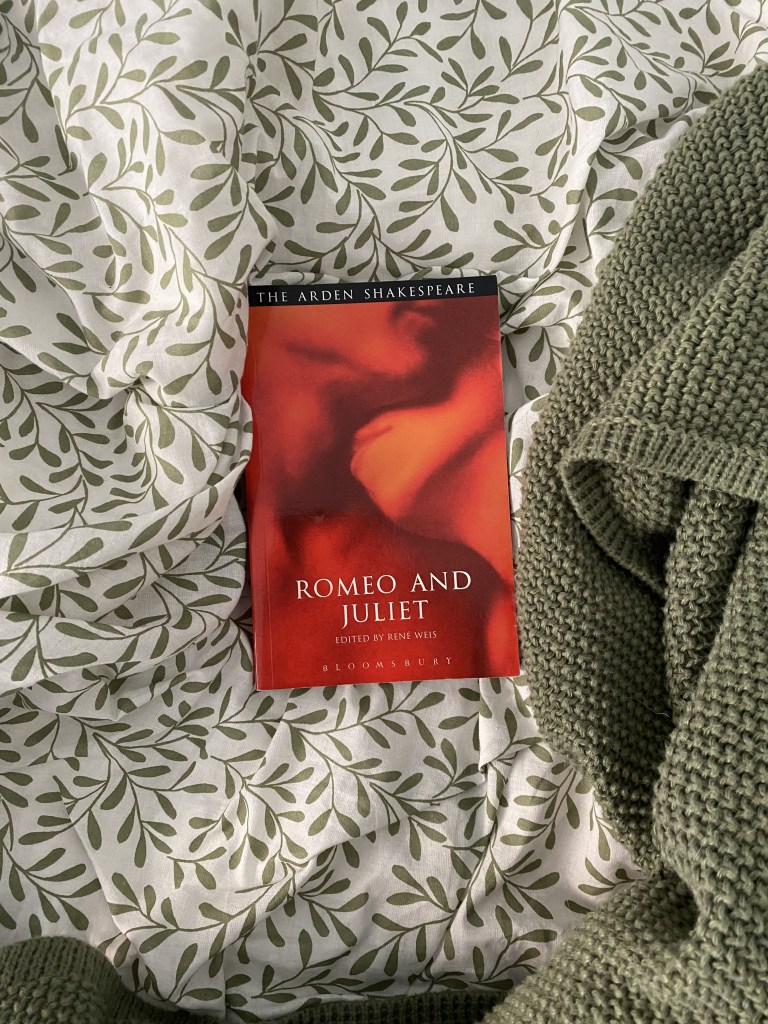
I always read the Arden editions of Shakespeare’s plays, because they are the ones we used in university and I find them to be incredibly useful. They are full with helpful annotations and explanations that make my reading experience easier. Plus, they always have an introduction shedding light on the staging history of the play and any of its relevant themes. I usually read it after I have read the play, as the introduction tends to be full of spoilers. But it does help me appreciate what I have just read that much more.
For all these reasons, I think it is a shame that Shakespeare is often perceived to be high-brow culture, only for those with a good education or wealthy parents who took them to see their first play before they could walk. Back in Shakespeare’s day, before Shakespeare was Shakespeare, if you know what I mean, his plays were being watched by all kinds of people from all classes. It was entertainment for the masses, from Queen Elizabeth I to normal working-class Londoners. And that’s the way it should be today, too, in my opinion. His work is not too difficult for anyone, even if it can be intimidating at first. As I’ve said above, his plays grapple with essential questions that concern us all, and they are highly entertaining. Shakespeare is for everyone, and there is absolutely no shame in having to read his plays multiple times, or reading one of those Shakespeare For Dummies versions (been there, done that). I’m tired of people trying to gatekeep Shakespeare and would encourage everyone to give his work a go. It’s full of humanity and brimming with life.
If you’re not sure where to start, I have a blog post with my favourite Shakespeare plays!! I hope this helps and that, no matter whether you’ve read some of his plays or don’t know a single line of Shakespeare, it has inspired you to pick up one of his plays (or his sonnets!) and have fun with it!


 lou's library
Leave a comment