Six years ago I was forced to read Wuthering Heights for a university seminar and I hated every single page of it. I swore never to open that book again, but a few days ago, I did just that. There’s a trainwreck of an adaptation heading our way, after all, and a girl’s gotta do what a girl’s gotta do to participate in the gossip. In an educated way, of course, and because my memory is a sieve and I did not remember much about Wuthering Heights other than that every single character sucks, I had to go back to the source material and read the damn thing once more. And no one is more suprised to hear it than me, but it turns out it was much better the second time around! So, let me take you on the journey of my second read of the equal parts beloved and loathed Wuthering Heights. There will be spoilers in this review, but you’ve had almost 200 years to read this, so you know, do try to keep up.
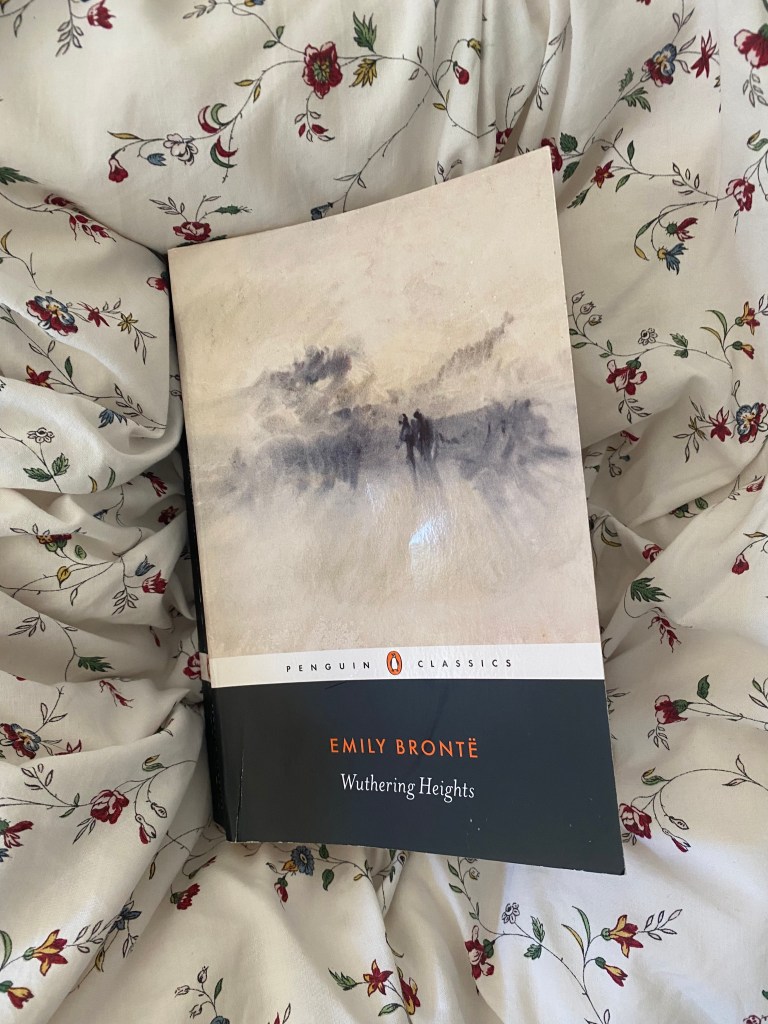
If you don’t know what Wuthering Heights is about, please quickly read the Wikipedia synopsis, because I couldn’t possibly tell you the plot without hopelessly confusing you. (Don’t give up on reading the book because of the impossible to understand family relations, I promise it will make a little more sense the further you get, but I admit I still had to stop and think hard who was being talked about towards the end of the novel.)
One of the aspects I wanted to pay special attention to this reread was the question of Heathcliff’s heritage. Mr. Earnshaw brings him home with him from a trip to Liverpool, which was the UK’s most significant slavery port at the time. This implies that Heathcliff might be the descendant of slaves. And because I’ve seen lots of wild takes on Heathcliff’s appearance since the trailer featuring Jacob Elordi as Heathcliff dropped, I would like to make one thing clear: Heathcliff is not white. And he’s constantly othered for it, which is a big reason for his increasingly unhinged behaviour throughout the story, I would argue. In case you need textual evidence, here is young Heathcliff envying a white boy:
I wish I had light hair and a fair skin, and was dressed, and behaved as well, and had a chance of being as rich as he will be!
So, obviously there are a few things going on here: Heathcliff longs for a higher status in society (although probably just in the household he is being brought up in) and acutely feels his otherness, which he instantly links to the colour of his skin. He is being made to feel the difference between being white and non-white in late 18th century England. Of course, the people adapting Wuthering Heights still can decide to cast a white dude as Heathcliff, I just think it’s a shame because I naively thought we all had agreed that we need more non-white representations on screen, and also, Heathcliff’s treatment because of his otherness (of which his skin colour is a big part) leads him to his unhinged behaviour, and without that, there simply wouldn’t be a story.
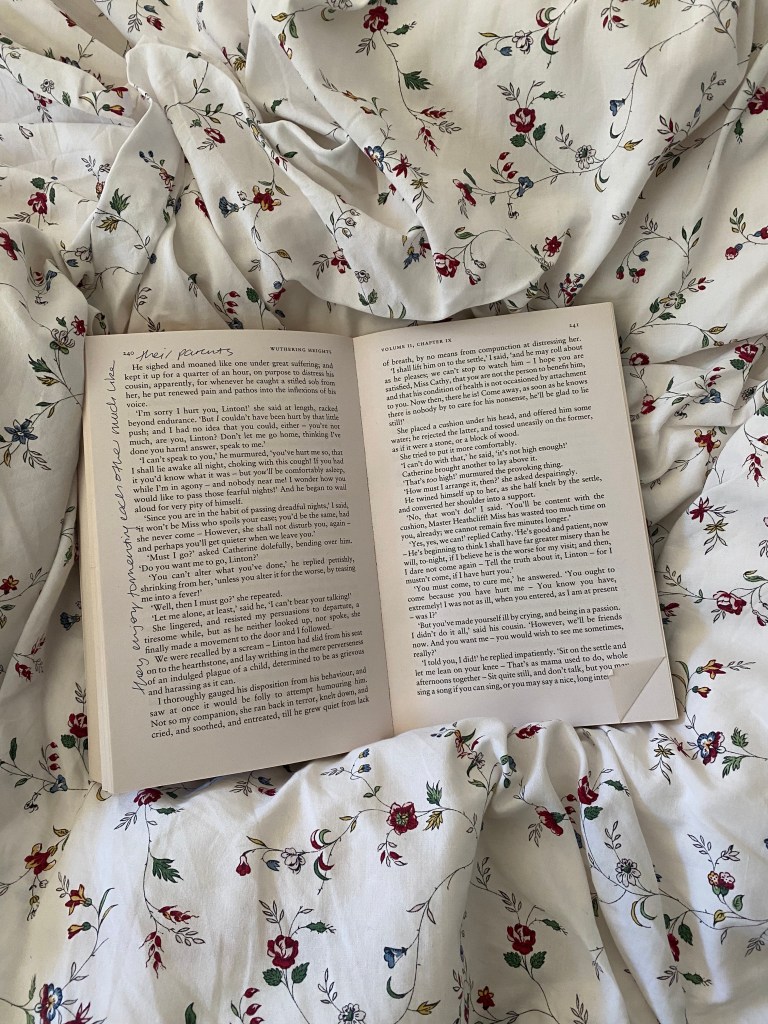
Now that we’ve settled that debate, let’s talk about what I liked about Wuthering Heights: I think Emily Brontë ought to be congratulated for choosing a theme (desperate hatred, and no, you won’t convince me the theme is actually love) and a vibe (sinister, gothic, so damn bleak) and running with it as though her life depended on it. She committed to writing about a bunch of completely ludacrous and genuinely bad characters and didn’t look back once. In the 19th century, as well!!! What a badass move!! And, once you accept that reading this book will be a truly wild ride and that you won’t like a single person that you will meet and just embrace it, its misery is strangely satisfying (anyone else thinking I’m starting to sound delusional myself?).
It’s quite difficult to describe, but the more I read, the more I was able to appreciate this minute and dedicated exploration of the consequences of two people not being able to be with or without each other. And yes, they absolutely made it everyone else’s problem and my god, did I detest them for it, but it does bring up questions of agency and character. I understand Heathcliff had a rough upbringing and that did make me have sympathy with him for the first 100 pages or so, but then he turns into an absolute monster of a person, not shying away from physically and emotionally abusing others and finding pleasure in it. So, at some point I did think to myself: How many of his actions can be excused by his own trauma? Can’t we expect him to grow up and rise above it, or at the very least, not put everyone around him in hell because of his own misery?
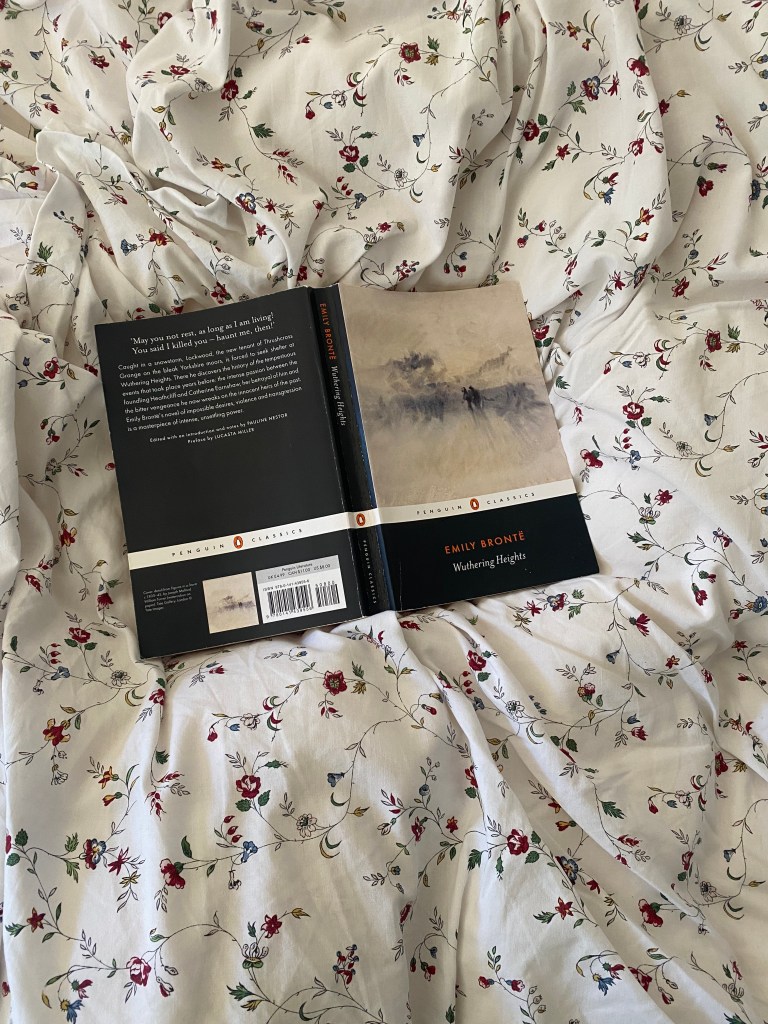
There’s so much to think about there, and also, if you’re into morally grey characters, you will have a field day with Wuthering Heights. And yes, apart from Heathcliff, I would argue that the characters aren’t all bad, which is what makes them so intriguing. And even Heathcliff hasn’t always been bad. So you get to ask yourself what made these people act in this way. And is it all just one big tragedy, destined to act out in this way, or could the chain of tragic events have been broken if one of them had resisted their basest instincts and decided to be a decent human being for once?
Do you see why I feel so conflicted about Wuthering Heights? It’s full of intriguing and fascinating questions, but does not offer much in way of an explanation. You are left to ponder that yourself once you have read the book. And while, the first time around, I was so angry at having been made to read a story about miserable people being miserable to each other, I feel no anger this time around. I feel sympathy and sadness, but also, there is this sense of me feeling like I understood the characters and their motivations in a way I did not when I read Wuthering Heights six years ago. You would hope I have matured as a person and reader since then, but regardless of that, I think this book benefits greatly from a reread. I still did not have a great time reading it, but the subject matter is just too bleak for me to rejoice in getting to read about it.
Perhaps when I first read it, I still expected every good book to make me feel good. Wuthering Heights will always make me feel lots of emotions, none of them good. But I now know that I can still be grateful to have read such a book and have taken quite a lot from it. Emily Brontë was incredible at looking into the souls of her characters and understanding precisely why they would act a certain (usually completely unhinged) way. There’s humanity in this tale, although hardly ever the good kind. But humans aren’t always good, and this book is about people who wanted to love desperately and destroyed each other in the process, wreaking havoc on the generation after them. That’s powerful stuff.

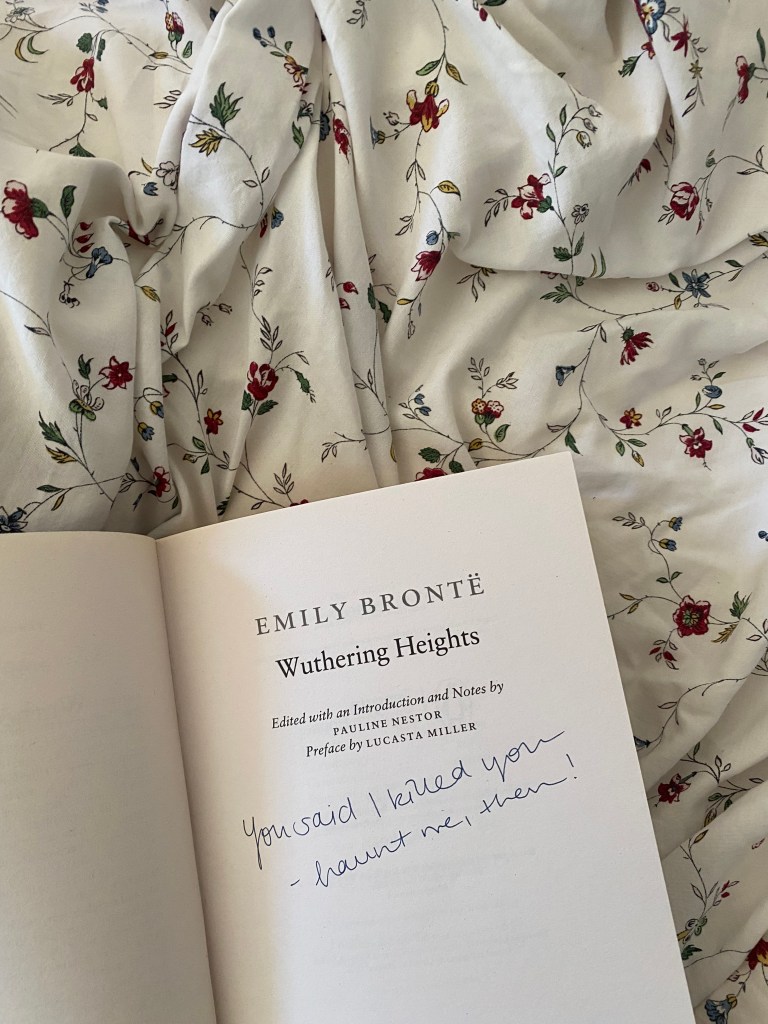
In terms of the writing, I don’t think Emily was the most skilled of the Brontë sisters (that title belongs to the ever-forgotten Anne, in my humble opinion). For the most part, I found Wuthering Heights full of rather dense sentences, but every now and then, Emily would bang out a paragraph that made me go ‘DAMN!’. Case in point:
Catherine Earnshaw, may you not rest, as long as I am living. You said I killed you – haunt me, then! (…) Be with me always – take any form – drive me mad! Only do not leave me in this abyss, where I cannot find you! Oh, God! It is unutterable! I cannot live without my life! I cannot live without my soul!
See? So bleak and violent, but there’s beauty in there, too. And while everything in me screams that we need more beauty in this story, more tender moments and noble motivations, Wuthering Heights wouldn’t work this way. Emily Brontë went all in, and the result is the sort of story that makes me shudder at the desolation and absence of kindness, but you cannot deny it is a vibe.
So, in short, I’m not quite sure where Wuthering Heights and I are at. We’re not friends (yet) but old acquaintances, do you get what I mean? I can appreciate it and see why other people love it, and who knows what will happen to me if I read it a couple more times. It’s certainly deeper and more multi-layered than I suspected when reading it for the first time. It’s still a hopelessly sad and unfathomable read, in many ways, but I did not have a bad time reading it and that’s worth a lot.
Here’s a little disclaimer because I’ve just rambled on endlessly about a book I don’t much care for: I genuinely believe in reading whatever makes you happy and there’s no reason whatsoever to force yourself to read books some dead white dudes decided were classics (unless you’ve decided to study English, than unfortunately, you have ample reason to do just that). I normally don’t do that. And believe me, I shall be back to reading books that bring me joy in no time. But sometimes, I do think it is worthwhile to go back to something you had very strong (negative) feelings about a while ago and see how you feel about it now. That might just teach yourself a thing or two about the thing, but also yourself. So, you know. Make of that whatever you will. I just wanted to point out I’m aware nobody made me read this and that it was my choice to spend my time reading Wuthering Heights, so perhaps I don’t have a right to complain (actually, scrap that, I do get to complain!!).
If you’ve read Wuthering Heights, please tell me all your thoughts!!! I think it is one of the most divisive books out there and I need to hear other people’s opinion on it!!

 lou's library
Leave a comment