English isn’t my mother tongue, but most of the books I read have been published in English in the original. I can’t help that I just love British and Irish non-fiction, but also the novels published in that part of the world and will always continue read widely from there. But equally, I think it’s fun and important to branch out every now and then and discover books written by non English speaking authors. So without further ado, here are some great translated fiction books for you to get lost in!
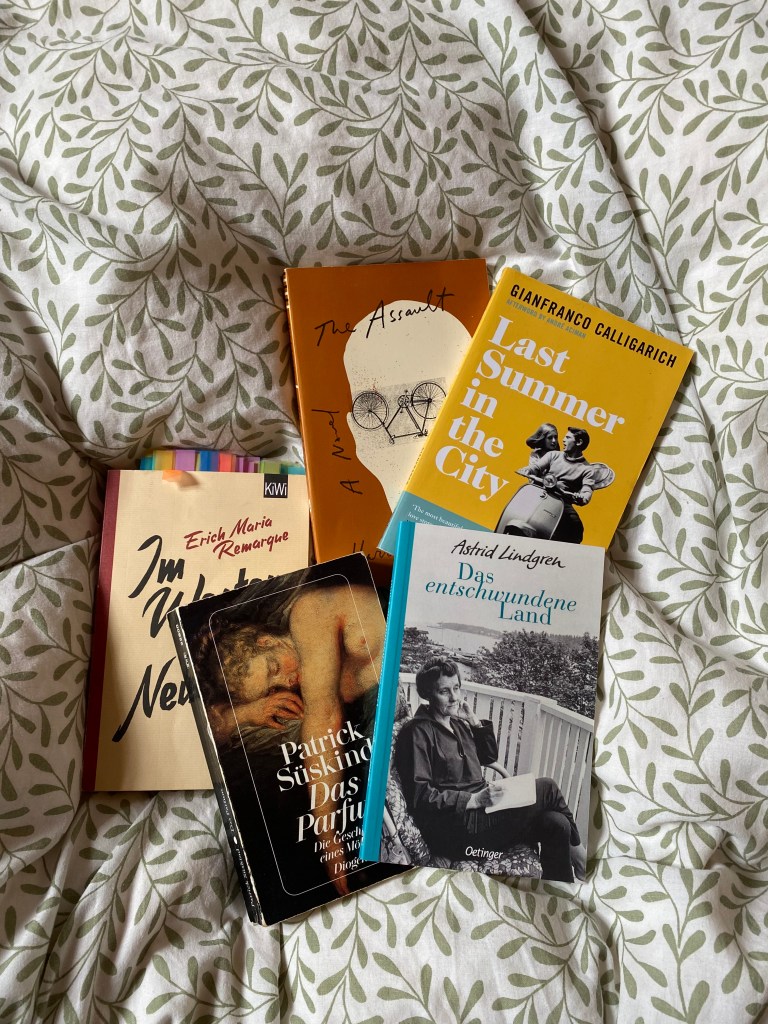
All Quiet On The Western Front by Remarque

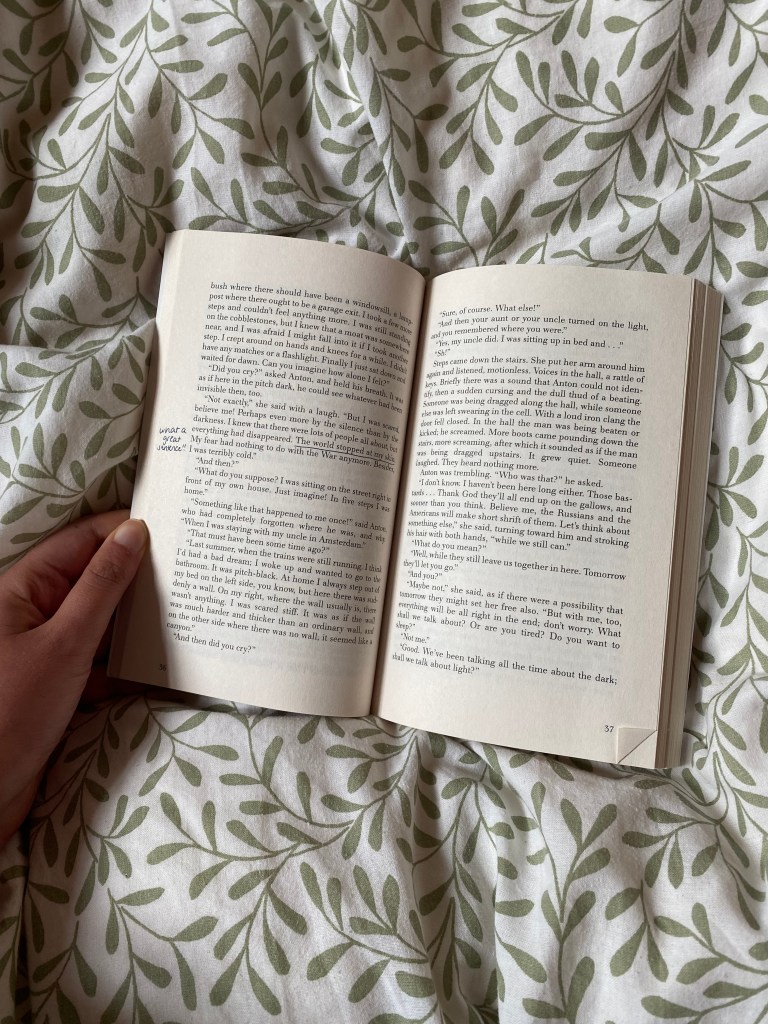
This book is one of the bestselling German novels ever and also happens to be my absolute favourite book. All Quiet On The Western Front is the devastating tale of Paul Bäumer, a young soldier in WW1. In my opinion, the reason this book hits the way it does and has become such a classic is that Remarque makes you feel the war in a way I thought hardly possible. The writing is sublime, I can hear Paul Bäumer’s voice in my head at all times, his way with words is so distinct (it also helps that I’ve read All Quiet On The Western Front more times than I can count on one hand). Of course, it’s an incredibly important story about the cruelty of war and given that we are living in rather trying times, it could hardly be a more crucial read right now. I thrust this book into the hands of basically anyone I meet and nobody has so far come back and not liked it. So treat yourselves to this stunning novel that will make you be in love with humanity but also absolutely hate it. Happy times.
The Assault by Harry Mulisch

We are continuing the theme of war books, but The Assault is focused on the Netherlands during the Second World War. It follows a family that experiences a pivotal moment during the war that means their lives change forever. The Assault grapples with the impact of war on ‘normal’ people and how it leaves a lasting impact on entire generations. I discovered it in a Dutch bookshop and was told it’s a classic in the Netherlands and I can totally see why. It explores the theme of war, loss and circumstance with so much humanity and tenderness. It emphasises human agency but also showcases how difficult it can be to act on that agency when something devastating has happened to you that was completely out of your control. I would say that The Assault is a hopeful book despite its dark themes, and I found it incredibly insightful to read about this war from a Dutch perspective, as I’m much more accustomed to the German one.
Perfume by Patrick Süsskind

If there’s a book I wish I could read again for the first time, it would be Perfume by Patrick Süsskind. This is a German modern classic and it’s one of the few books that was required reading at school that I absolutely loved. Perfume takes you on an absolutely bonkers (and rather dark) journey through France following a man called Grenouille who is trying to create the perfect scent. It’s absurd and morbid and should not work at all, but does because Patrick Süsskind is an incredible writer and so good at making you believe in every single word he writes. It’s genuinely one of the most well-written books I have ever read, as smells play in incredibly important role in the novel and I don’t know about you, but I’m absolutely horrible at describing smells. Yet I could smell what Süsskind described as though he held a bottle under my nose. Perfume will leave you on the edge of your seat with no idea what will happen next and you will not want this marvellous book to end. Definitely one of my all time favourite German books.
The Vanished Country by Astrid Lindgren

Most people know the Swedish Astrid Lindgren for Pippi Longstocking or some of her other (pretty damn incredible) children’s books. And rightly so. But I would highly recommend reading The Vanished Country, her account of her own childhood in the Swedish countryside. Her upbringing greatly shaped her own fiction, so reading The Vanished Country is a great way of understanding her best-loved works better. It’s a very short read, but jam-packed with imagery that made me feel as though I was right there with her. I went on to read an entire biography about Astrid Lindgren after having read The Vanished Country, as I wanted to know more about her and found her to be such an inspiring woman. For me personally, Astrid Lindgren has greatly impacted my (rather limited) idea of the Swedish countryside, so it was a lot of fun for me to learn more about where her inspiration for the settings for her books came from.
Last Summer In The City by Gianfranco Calligarich
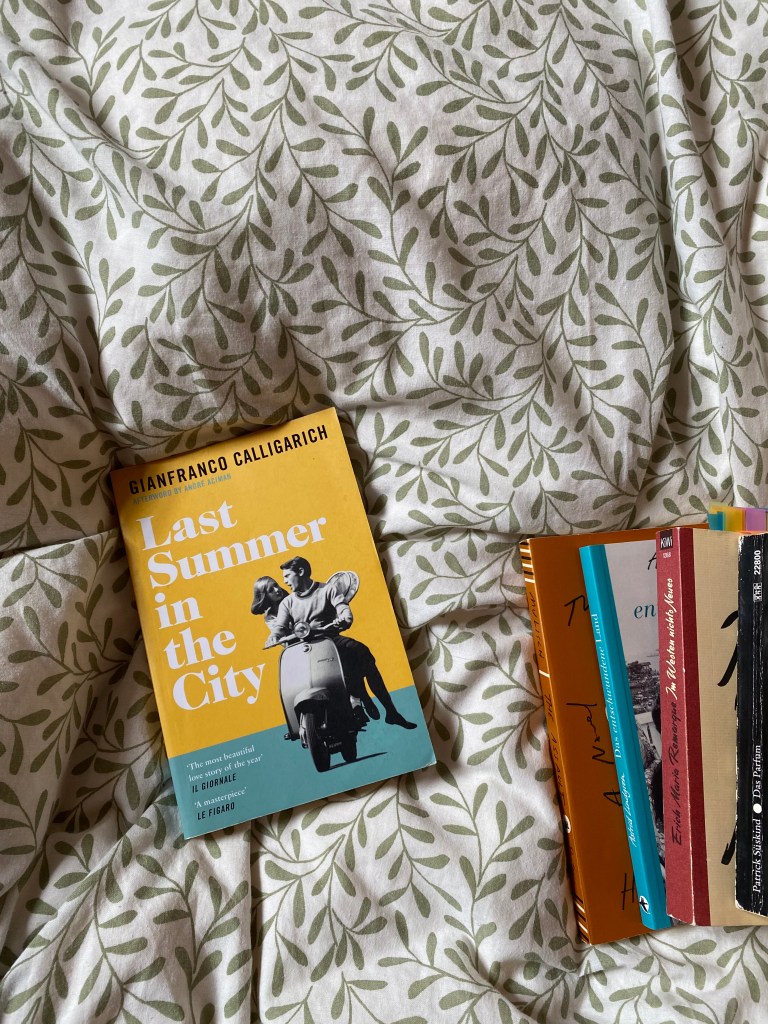
I love books set in Italy. It always makes me feel like I’m on holiday, and that can only ever be a good thing. Last Summer In The City is partly set in the Rome of the 1970’s and focuses on Leo, who is trying to find his feet in a new city and in life more generally. It’s a novel full of yearning and tenderness, a story of love and loss and the writing is stunning. I’ve heard Last Summer In The City be compared to The Great Gatsby or The Catcher In The Rye, and while for me the comparison doesn’t quite hold up, I can see why people compare it with these classics. It has the same sense of a protagonist wandering around that we also find in The Catcher In The Rye, but Leo also seems a bit like a spectator of his friend’s lives that brings The Great Gatsby to mind. I do think Last Summer In The City is a great book in its own right, though, and as I have struggled with Italian fiction in the past, I was so glad to find that I thoroughly enjoyed this one!
There you go, some translated fiction to get lost in! I honestly think we all benefit greatly from branching out every now and then, so I hope you’ll enjoy these! If you need more recommendations, I have a blog post about underrated books and if you’re more into non-fiction, I have a blog post with recommendations too! Happy reading!

 lou's library
Leave a comment