The new year is upon us and with it lots of goals, dreams and aspirations. But since a new year is also a natural moment for pondering and questioning, I would like to go into why I think setting reading goals does not do us many favours at all.
In 2019, I failed my usual goal of reading 50 books and was so mad I challenged myself to read 100 in 2020. I managed to do that (I read the 100th book on New Year’s Eve), thanks to the pandemic and my stubborness. But I didn’t enjoy the challenge much at all. In fact, it frustrated me and in hindsight, I should have abandoned it halfway through. I was so determined to read 100 books that most of them were short, because both a 200 page novel and an 800 page novel counted exactly the same in my challenge. What happened was that I ended up reading not what I wanted, but what would allow me to reach my goal.
A goal I had set myself, which also means I would not have let anyone down but myself had I not gone through with it. Admittedly, I did think being able to say “I read 100 books in a year” sounded cool. But is that what should drive my reading? I don’t think so. I understand where the desire to read as much as possible comes from. It is a source of great frustration for me that I will never be able to read all the books I am interested in, so reading as much as possible allows me to quench that thirst. But what good is it if I’ve read a lot, but hardly enjoyed any of it?
At the end of the day, I read because it makes me happy. And I want to do everything in my power to allow myself to be as happy as possible (when reading, but also in general). If reading 100 books within 12 months makes you happy, then go ahead and knock yourself out! What works for me might not work for you and we all have to figure out what we want to achieve when reading.
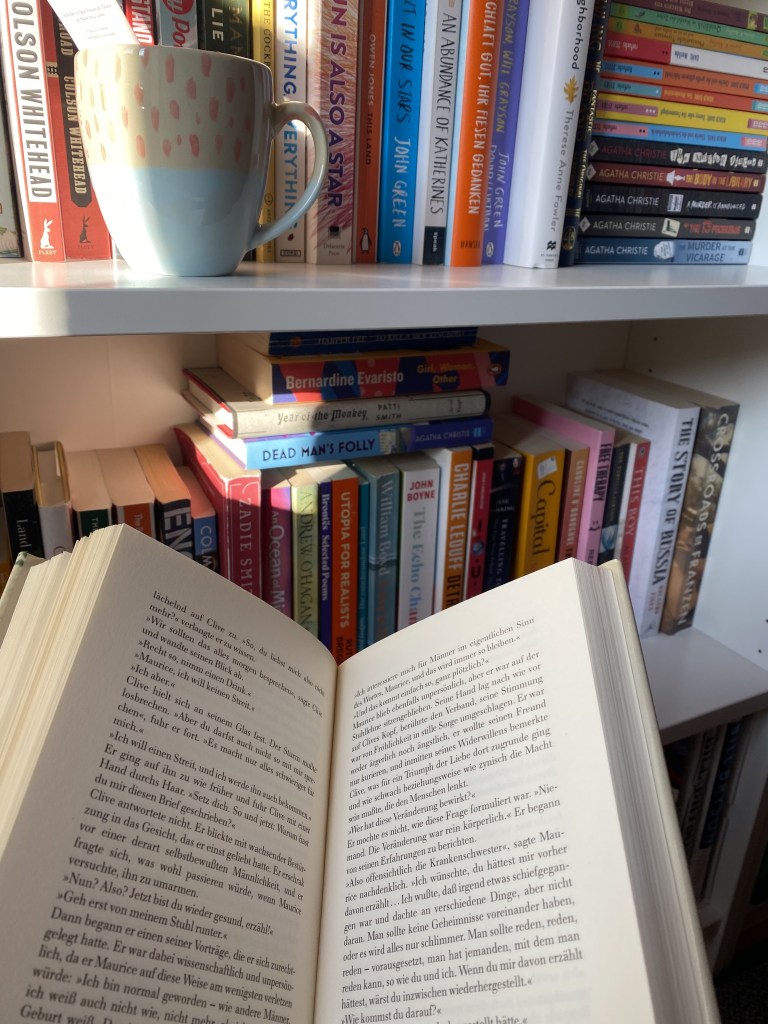
But I would like to be an advocate for not needing to achieve anything when reading. As long as you’re having a good time, then that should be enough. Of course, in a world where lots of us spend more time on scoial media than we care to admit and when there are so many topics we should all try to educate ourselves about, reading more books is an honourable goal. There is so much we can learn about each other and the world from a good book.
Pressuring ourselves into reading even when we do not feel like it is not the way forward, though. For example, sometimes I have to read quite a lot for work and when I come home, the last thing my brain can take is more information, no matter in what format. Those days, my time is better spent doodling or listening to soothing music instead of reading. Luckily, most days I can escape into a fictional world easily enough, but whenever that is the case, I want to be okay with it. For me, that is certainly still a work in progress, but it is something I want to be more mindful of going forward.
If you’re someone who has fallen off the reading wagon in recent years (or never even got on it in the first place) and wants to get (back) on it, then I understand that setting a goal can be helpful to ensure you will actually start reading. But maybe it would be more helpful to set a pages goal instead of a book goal. So, instead of aiming to read a book a month (or one book a year or whatever you aspire to), try to read 50 or 100 or 250 pages a month. There are books with fewer than 50 pages, so you might end up reaching your goal without having read much at all. By focusing on the page count instead, you’re free to read whatever books you choose and won’t be gravitating towards the short ones because they make you achieve your goal quicker.
I know fulfilling a goal is satisfying and I get why we do it. And I’m not against it in and of itself. If it works for you, then that’s great. I just think that in a society as focused on ambition and progress and achievements as ours, we should be careful to preserve little pockets of pleasure where we don’t judge ourselves. Reading can be that, if we just focus on what is important. And to me, that’s having fun.



 lou's library
Leave a comment